Why Salons Keep a Pointy Carbide Drill Bit On Hand
Step-by-step reasons to stock a pointy carbide drill bit for precise underneath and cuticle work in professional stations.
Consider this a compact checklist for your back bar: a single specialized bit can speed procedures, reduce reworks, and keep your filing consistent. Below are practical reasons a salon operations manager would authorize keeping a medium-grit, tapered pointy carbide bit in every drill case.
Why precision underneath nails matters
When you need to remove product or clean the underside of a free edge, a tapered point concentrates cutting action where you want it. The pointed profile lets you reach narrow channels and contour beneath enhancements without relying on manual files or risky scraping. You get a controlled contact area, which helps maintain consistent radius and avoids overcutting adjacent areas.
What the medium grit delivers
Medium-grit cross-cut flutes provide a balance between material removal and surface finish. For technicians, that means you can remove acrylic or hardened product from tight spaces efficiently while leaving a smoother surface for subsequent smoothing or sealing steps. The visible spiral flute pattern channels dust away from the contact zone, helping keep the work area clearer and reducing drag on the handpiece.
When a carbide point becomes the workflow choice
You’ll choose a carbide point when the job calls for durability and shape stability. Carbide resists wear under repeated contact with synthetic enhancements, so the bit keeps its tapered geometry longer than softer alternatives. That steadiness matters when multiple technicians share tools or when you run high-volume services; consistent bit shape makes service times predictable.
What the photo details tell you about fit
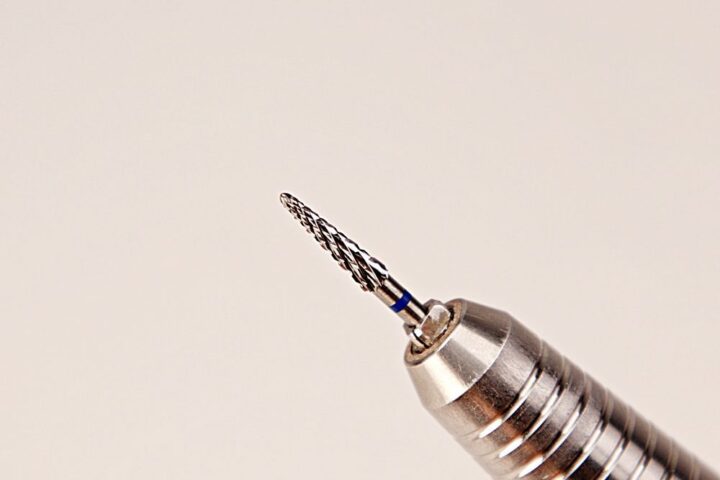
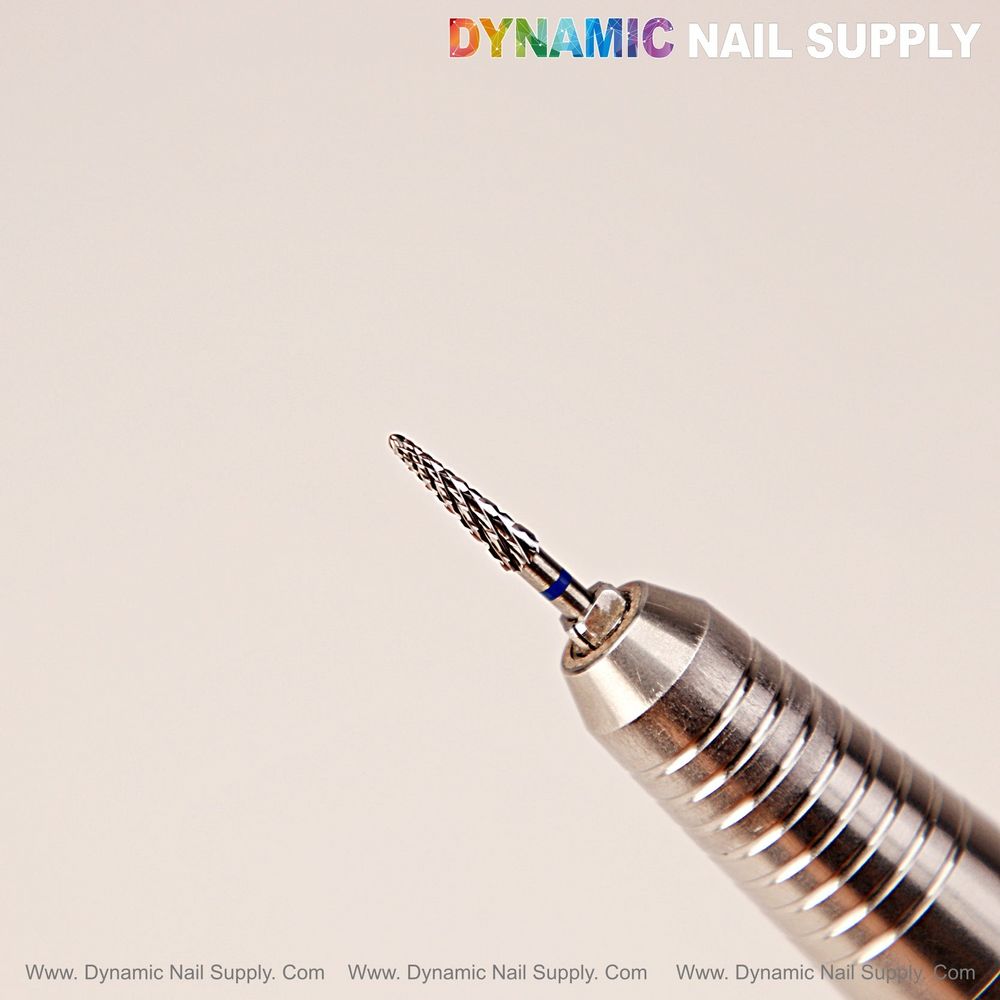
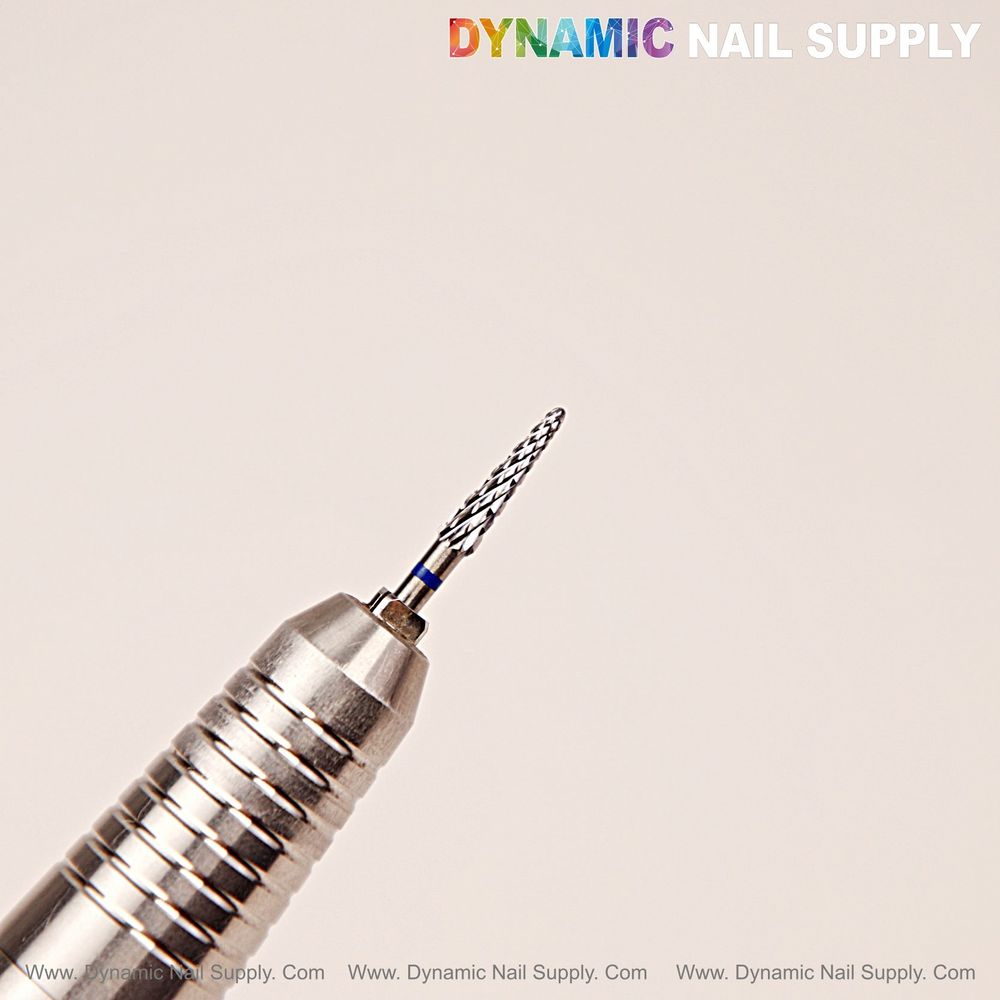
The close-up image highlights the bit’s chrome-like finish and fine ridged texture on the head, indicating a professional-grade cutting surface that visually confirms medium grit. A narrow identification band on the shaft helps you quickly distinguish this point from other heads at the station. The clinical macro shot emphasizes the tapered tip and cross-cut spiral flutes, so you can expect the geometry to work well for underneath and cuticle-adjacent access.
For routine maintenance and targeted underneath work, we recommend having a Medium Grit Pointy Bit available at each station.
Why stocking strategy matters
For inventory planning, a low-cost, durable bit is easy to justify. At its listed price of $7.49, it’s economical to replace when wear is evident; prices may change. Keep one or two in active rotation per technician plus backups in sanitised storage so appointments aren’t delayed when a bit needs swapping.
What handling and care you should follow
- Always run the bit at the manufacturer-recommended speed ranges for medium grit to avoid heat buildup.
- Clean debris from flutes between clients with a brass brush and disinfect according to your salon’s instrument protocol.
- Inspect for burrs or rounded edges; replace the bit if the tapered point loses its sharp profile.
When to choose this bit over others
Use the tapered point when you need pinpoint access and a medium level of aggressiveness. It’s not for bulk reduction across large surface areas; pick a barrel or large-diameter carbide for that. Keep the point for underneath cleaning, sealing cuticle junctions, and finishing narrow geometry around nail tips.
Mini glossary
- Point profile — the tapered shape that reaches tight spaces.
- Cross-cut flutes — spiral ridges that assist cutting and debris evacuation.
- Medium grit — balance between removal speed and surface smoothness.
Handle the bit with steady technique, replace it when the cutting edges show wear, and store spares so you never pause a service. Stocking a pointy carbide bit simplifies several niche steps in your protocol—small hardware, dependable impact. We encourage you to add one to your drill kit and notice the difference in control and consistency.